
Henoch-Schönlein purpura (HSP) is an IgA vasculitis that typically affects children aged 2-8 years and presents with a purpuric rash affecting the lower limbs and buttocks. Immunoglobulin A (IgA) is deposited in the blood vessels, skin, kidneys and gastrointestinal tract, causing inflammation. It is often triggered by an upper respiratory tract infection.
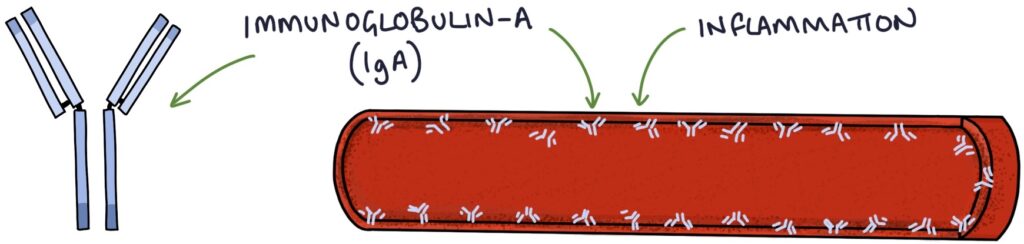
The four classic features are:
- Purpura (100%)
- Joint pain (75%)
- Abdominal pain (50%)
- Renal involvement (50%)
Features
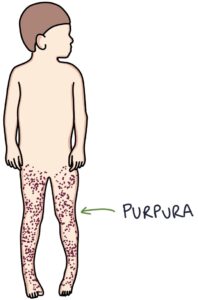
Purpura are palpable, non-blanching, red-purple spots under the skin. They are caused by inflammation and leaking of blood from small blood vessels under the skin. Typically, they start on the legs and spread to the buttocks. They can also affect the trunk and arms. In severe cases, skin ulceration and necrosis can develop.
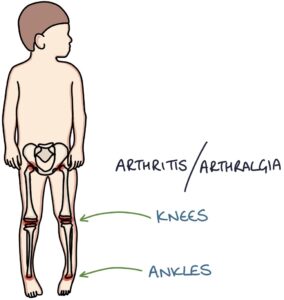
Around 75% of patients develop arthralgia or arthritis, often affecting the knees and ankles. The joints can become swollen and painful, with reduced range of movement.
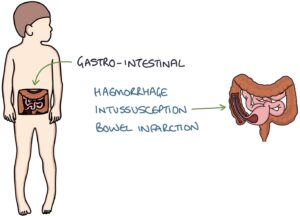
Abdominal pain suggests gastrointestinal involvement, which affects around 50% of patients. In severe cases, it can lead to gastrointestinal haemorrhage, intussusception and bowel infarction.
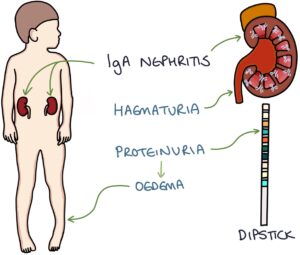
The kidneys are affected in around 50% of patients, with IgA nephritis (sometimes referred to as HSP nephritis). It may be asymptomatic and only detected on urine dipstick testing. It can lead to microscopic or macroscopic haematuria and proteinuria. Nephrotic syndrome and oedema can occur in severe cases.
Diagnosis
Other causes of a non-blanching rash need to be excluded, including:
- Meningococcal septicaemia
- Leukaemia
- Immune thrombocytopenia
- Haemolytic uraemic syndrome
Investigations to exclude other pathology and assess for organ involvement include:
- Full blood count and blood film for thrombocytopenia, sepsis and leukaemia
- Renal profile for kidney involvement
- Serum albumin for nephrotic syndrome
- CRP for sepsis
- Blood cultures for sepsis
- Urine dipstick for proteinuria
- Urine protein:creatinine ratio to quantify the proteinuria
- Blood pressure for hypertension
Management
Management is supportive, with simple analgesia, rest and proper hydration.
The use of steroids is debatable, with evidence suggesting they may shorten the duration of the illness but not affect long-term outcomes or rate of recurrence. Steroids may be considered in patients with severe gastrointestinal pain or renal involvement.
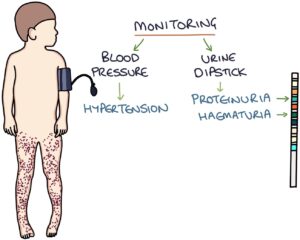
Patients are monitored closely while the illness is active and for 6-12 months afterwards, with regular:
- Urine dipstick monitoring for renal involvement
- Blood pressure monitoring for hypertension
Prognosis
Abdominal pain usually settles within a few days. Patients without kidney involvement usually recover fully within 4 to 6 weeks. A third of patients experience disease recurrence within 6 months. A very small proportion of patients will develop end-stage renal failure.
Last updated August 2026
Now, head over to members.zerotofinals.com and test your knowledge of this content. Testing yourself helps identify what you missed and strengthens your understanding and retention.
